/Avatar-MainMark-FullColor-400px.png)


As a bus fleet manager, accidents aren’t your only source of fines and litigation. Failing to comply with the Americans with Disabilities Act can lead to similar issues.
One mistake related to the Americans with Disabilities Act (or ADA for short) can cause:
- Federal investigations
- Court appearances
- Legal penalties and fines
- Mandatory corrective action plans
Beyond the potential punishments you can face, complying with this landmark law is the morally correct thing to do. The ADA exists to ensure your passengers who have disabilities have fair and equal access to your services.
As a fleet manager, you play a key role in ADA compliance. You can be the deciding factor in whether or not your passengers have their needs met.
What Is the ADA?
The Americans with Disabilities Act was created to give people with disabilities the same access to public services, buildings, and transportation that the rest of us enjoy. It became law in 1990 when the government realized a portion of the population wasn’t having their basic needs met.
Disabilities in this case refer to people who have physical, sensory, or cognitive disabilities, or people who require wheelchairs or other mobility devices.
The ADA applies to nearly all industries that are open to public, and they have many regulations that are specific to the transportation industry.

ADA Requirements: What You Must Know
The ADA sets clear regulations for transportation companies. These regulations impact all aspects of your industry, including booking trips or handling fare, how busses are designed and manufactured, the equipment on the bus, how passengers board the bus, and how your drivers interact with passengers.
Under ADA requirements, transportation companies discriminate against passengers with disabilities when they:
- deny transportation to a person with a special need
- do not give people with disabilities the same reservation opportunities as other passengers
- impose special charges
- request that people with disabilities reschedule in a way that is different from how this is handled for other people
Beyond these broad strokes, there are dozens of regulations under the ADA that you need to know. Below are some of the most pertinent.
Accessible Vehicles and Equipment
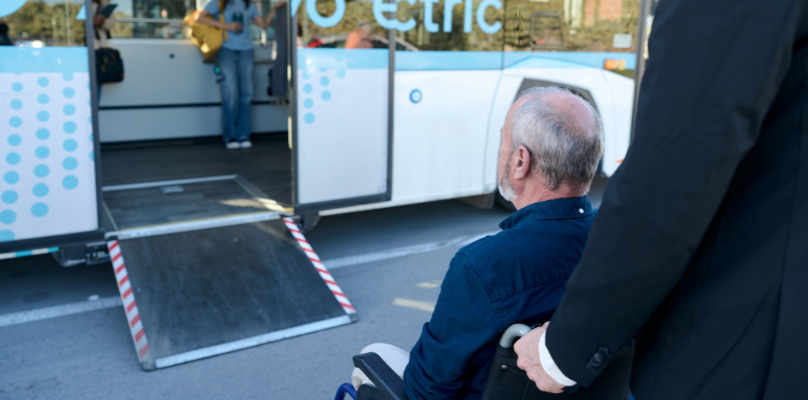
Buses and motorcoaches are almost always required to be equipped with approved accessibility features, including:
- Wheelchair lifts or ramps
- Securement systems for mobility devices
- Proper signage and lighting
Equipment also must be maintained. A broken lift or missing securement strap is a violation. As such, it’s crucial for your drivers to check on the equipment and cycle the lift or ramp during their pre-trip inspections. If they find a problem, it needs to be fixed before they go out on the road.
Proper Mobility Device Securement
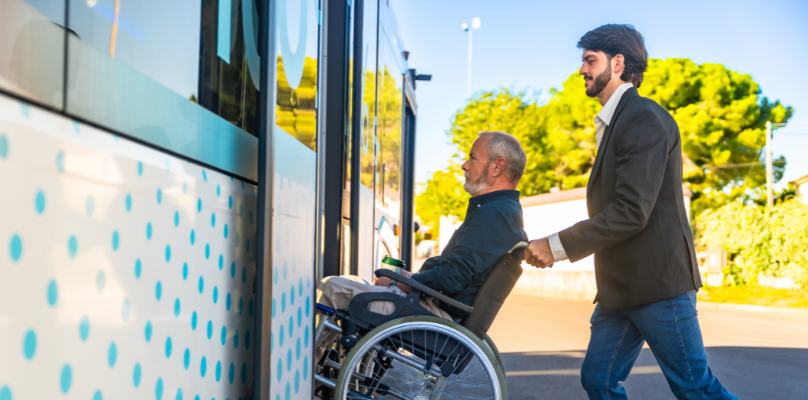
The ADA requires that drivers know how to properly secure wheelchairs and other mobility devices. This includes:
- Safely boarding the passenger and their mobility device using either the lift or ramp
- Securing the mobility device to the bus
- Securing the passenger to their mobility device
Without proper mobility device or wheelchair securement, passengers are at risk of serious injuries.
Additionally, if a passenger wants to transfer from their mobility device to a seat, your driver must let them.
We highly recommend you train your drivers on the laws and processes related to mobility device securement.

Driver Assistance and Passenger Interaction
Drivers are required to provide reasonable assistance to passengers with disabilities. This can include:
- Operating lifts or ramps
- Allowing adequate time for boarding
- Communicating clearly and respectfully
- Offering an arm for support to help someone navigate to their seat
However, it is crucial that your drivers do not touch a passenger without the passenger’s expressed permission. Well-intentioned drivers will sometimes grab hold of someone to help them to their seat, but if the person is not expecting this, they can fall and get hurt.
When in doubt, your drivers should simply ask passengers, “How can I help you?”

Boarding Service Animals
Your drivers are required to allow passengers to board with service animals. If your driver suspects someone is bringing a pet on board, they should not outright accuse the passenger. The driver should ask, “What task does this animal perform for you?”
Service animals must be close to the passenger. The animal cannot sit in a seat or block the aisle.
If another passenger objects to the service animal, the driver must ask that passenger to switch seats. The passenger with the service animal cannot be asked to switch seats.
A driver can only move or eject a service animal if it causes a disturbance, threatens another passenger, or is out of control.
However, it is important for your drivers to never touch or move the service animal themselves. The driver should ask the passenger to do so.
Training Your Drivers on ADA
As you can see, there are dozens of actions your drivers must take to comply with ADA regulations. One mistake, even when well-intentioned, can lead to complaints and litigation.
You can’t count on your drivers to know these regulations themselves. You need to train them.
A program like the Bus Safety Course makes it easy to educate your drivers on everything they need to know. The Bus Safety Course includes access to over 50 titles that cover topics such as defensive driving, personal injury prevention, mobility device securement, and the Americans with Disabilities Act.
If you want free access to The Bus Safety Course, follow this link.
Why The ADA Matters to You
ADA compliance is crucial for preventing lawsuits, fines, court appearances, and audits. More importantly, though, the ADA is about safety, fairness, and professionalism.
Following ADA regulations reduces your risk and helps you provide service to people who depend on you.
However, it’s not enough for you to know these rules. You need to include the ADA in your driver training.
If you invest in a program like The Bus Safety Course, you can educate your drivers on what they need to know while saving yourself time and headaches.
Get the latest articles on all things transportation delivered straight to your inbox.
Schedule a live demo
Share:


Categories
